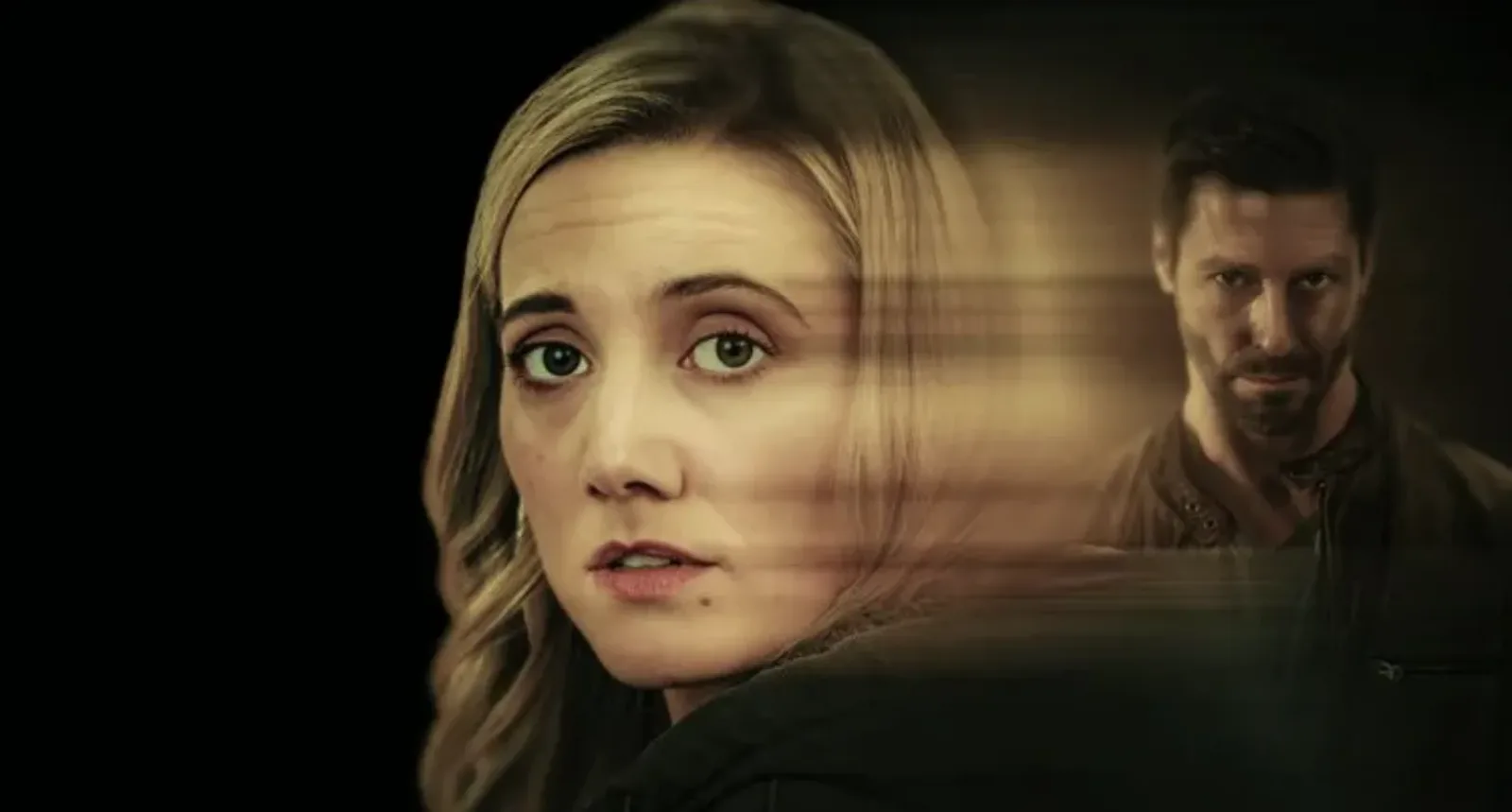
The Last House Filming Locations
There is something immediately unsettling about a house refusing to behave like a house. In Netflix’s The Last House, a suburban family’s safest space abruptly becomes a prison. Jason and Ann wake to find every normal route outside useless, the doors will not open, the windows cannot be broken, and the strange rain falling across…
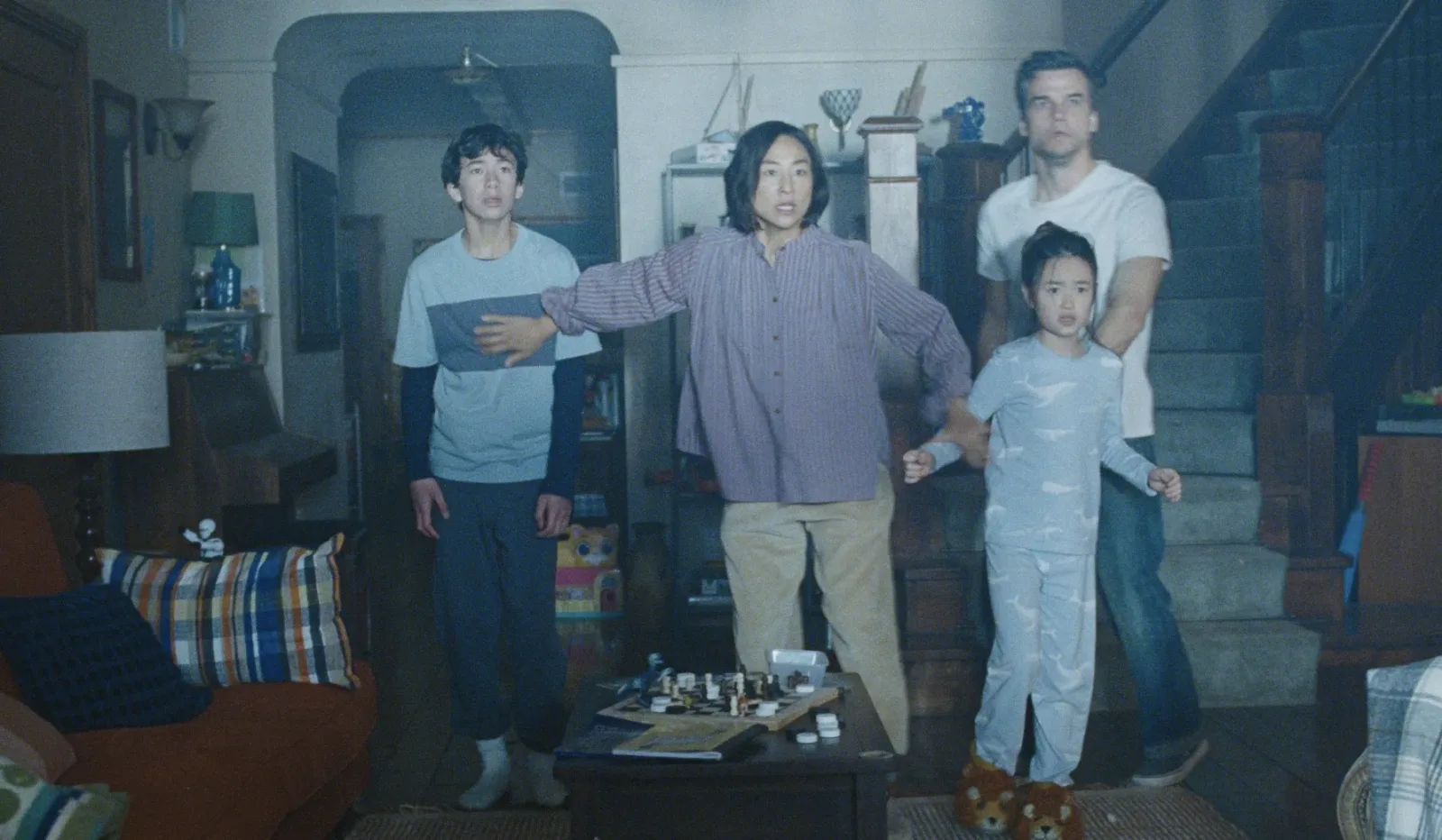
There is something immediately unsettling about a house refusing to behave like a house. In Netflix’s The Last House, a suburban family’s safest space abruptly becomes a prison. Jason and Ann wake to find every normal route outside useless, the doors will not open, the windows cannot be broken, and the strange rain falling across their neighborhood appears connected to whatever has sealed them inside. Days stretch into months and eventually years, forcing the family to reinvent daily life while the building around them visibly deteriorates.
Directed by Louis Leterrier from a screenplay by Matthew Robinson, The Last House stars Wagner Moura and Greta Lee and began streaming on Netflix on August 7, 2026. Despite its American setting, the sci-fi survival thriller was made in England. Surrey provided its crucial studio base, while additional filming reached Hampshire and the wider London production region. Most importantly, the filmmakers constructed the central house rather than simply finding a suburban property and locking the actors inside it.
England Stands In for Seattle
The story places Jason, Ann and their children in suburban Seattle, but the production remained in the United Kingdom. Wagner Moura confirmed in an interview that he shot the movie in Surrey with Lee and the young actors, while The Guardian also noted the unmistakably British architecture hiding beneath the film’s American setting.
That makes The Last House a slightly unusual location production. There is no sprawling collection of recognizable landmarks masquerading as the Pacific Northwest. The camera spends so much time enclosed with the family that the geography outside their home almost becomes irrelevant. England supplies the physical world, but production design, framing and effects strip away most clues that would immediately reveal where the movie was actually made.
The main destination was Surrey, southwest of London, where one of Britain’s largest filmmaking complexes gave Leterrier enough controlled space to build the movie’s real centerpiece.
Shepperton Studios
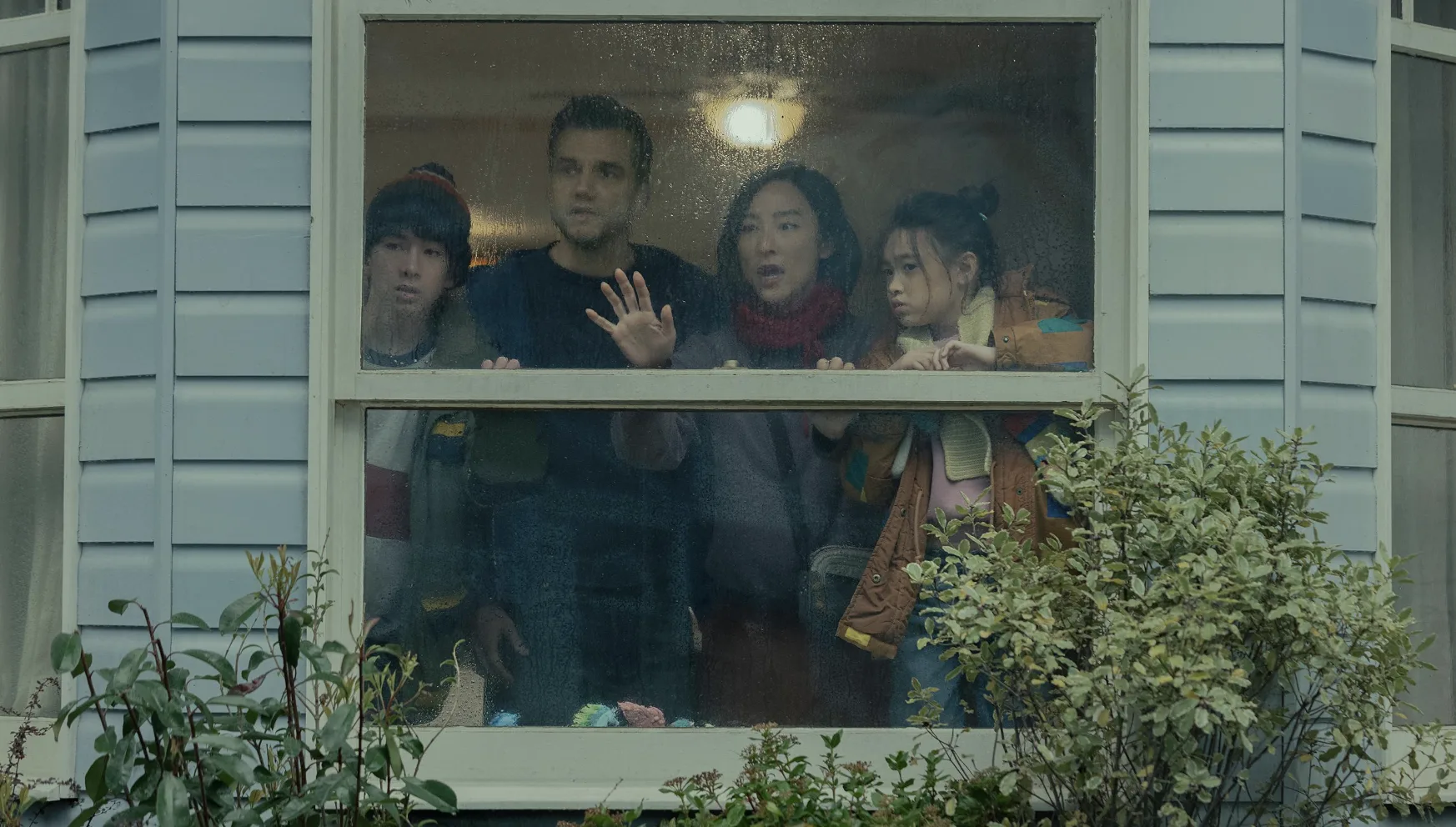
The Last House was shot at Shepperton Studios in Shepperton, Surrey. Pinewood Group, which operates the complex, has directly identified the movie as a Shepperton production. The studio currently contains 31 sound stages, two large backlots and around 12 acres of backlot space, along with workshops and other facilities designed for large-scale film construction.
For a movie dominated by one residence, those facilities mattered more than scenic streets or famous buildings.
Production designer Kevin Jenkins and his department constructed the family’s home as a working film environment. Netflix describes the house almost as another character, designed to change physically as the years of confinement pass. Kitchen equipment, furniture, children’s possessions and other ordinary objects gradually age alongside the people using them.
Moura later called the set an engineering achievement, particularly when the house had to undergo much more extreme transformations during the second part of the story. Reuters reported that the production’s core action was shot inside this single evolving house, an enormous technical challenge despite the apparently modest scale of the premise.
The House Was Built to Age
A permanent real-world home would have imposed obvious restrictions. Walls cannot conveniently disappear when a camera needs another angle, ceilings cannot always carry effects equipment, and flooding somebody’s actual living room for repeated takes tends to make location owners understandably nervous.
Building Jason and Ann’s home allowed Jenkins’ team to control all of that.
The house had to represent several different stages of the family’s captivity. What begins as an ordinary, recognizable domestic interior gradually becomes worn, improvised and increasingly hostile. The family adapts rooms for survival while the production department simultaneously tracks years of fictional wear. Moura said he had never encountered a set containing that level of detail and complexity.
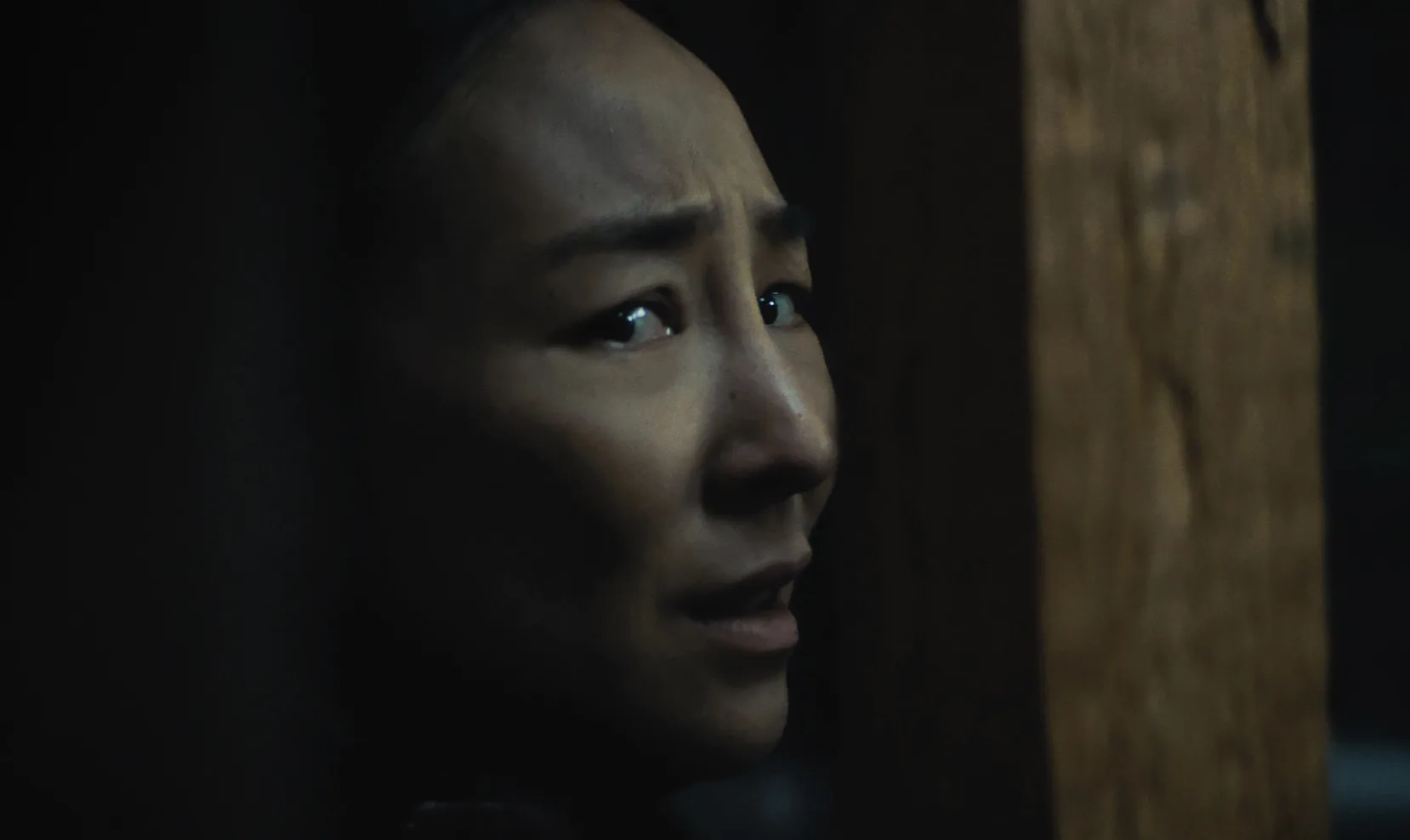
Leterrier also resisted making the environment look excessively artificial. He shot the first half of The Last House on 35mm film and leaned heavily on practical effects, citing the tactile domestic feeling of the Steven Spielberg and Amblin films he grew up watching. The aim was to make the house familiar before turning familiarity against the audience.
That choice explains why Shepperton is arguably the film’s most important filming location even though viewers never see the studio itself. The location is hidden inside the architecture it allowed the crew to build.
Calshot Beach, Hampshire
There was, however, some filming away from Shepperton’s enclosed stages.
Production under the title 11817 was reported at Calshot Beach in Hampshire in June 2025. Calshot sits on the edge of Southampton Water, where a long shingle spit reaches toward the Solent. Local reporting documented the Netflix production working there toward the end of the shoot.
Calshot is visually very different from the suburban house dominating most of the movie. It offers open water, exposed shoreline and an almost unlimited horizon, exactly the opposite of the compressed interior geography experienced by the family.
Without wandering too far into spoilers, that contrast becomes increasingly relevant as The Last House expands beyond its initial locked-room premise. Calshot’s coastal environment could accommodate material involving the wider world beyond the neighborhood without requiring the production to leave southern England.
The surrounding Calshot Spit also includes Calshot Castle, former Royal Air Force facilities, hangars and extensive waterfront infrastructure. The available production reporting specifically identifies Calshot Beach rather than establishing that every nearby landmark appears on screen, so the beach is the confirmed location worth recording.
Was The Last House Filmed in London?
London appears frequently in general production listings for The Last House, and Greta Lee said before shooting that she would be making the project in London. Industry tracking likewise placed the production in the London filming region during spring 2025.
That should not be confused with confirmation that central London landmarks appear in the movie.
There is currently no strong production evidence identifying Tower Bridge, Big Ben, the London Eye, the Shard or St. Paul’s Cathedral as The Last House shooting locations. Such sightseeing-oriented establishing footage would also make little narrative sense for a film following a family in Seattle. The more accurate description is that the movie was a London-area production based principally in Surrey, with additional documented work in Hampshire.
Shepperton itself sits in Surrey, outside central London, but it belongs to the larger cluster of studios that makes Greater London one of the world’s busiest production centers.
When Was The Last House Filmed?
Netflix officially announced on April 21, 2025 that filming on the project, then known as 11817, was underway. Production records and crew credits place active work across spring 2025, extending into June. The Calshot Beach unit was also reported there during June, giving the film a practical production window of roughly April through June 2025.
Some industry tracking places cameras rolling as early as late March, suggesting that pre-announcement photography may have begun before Netflix publicly marked production. Rather than attaching an unsupported single start date to every unit, April through June 2025 is the safest description of the principal shoot.
The opaque number 11817 remained attached to the production during filming. Netflix later changed the public title to The Last House, which much more directly describes the movie’s central image and predicament.
The Last House Cast
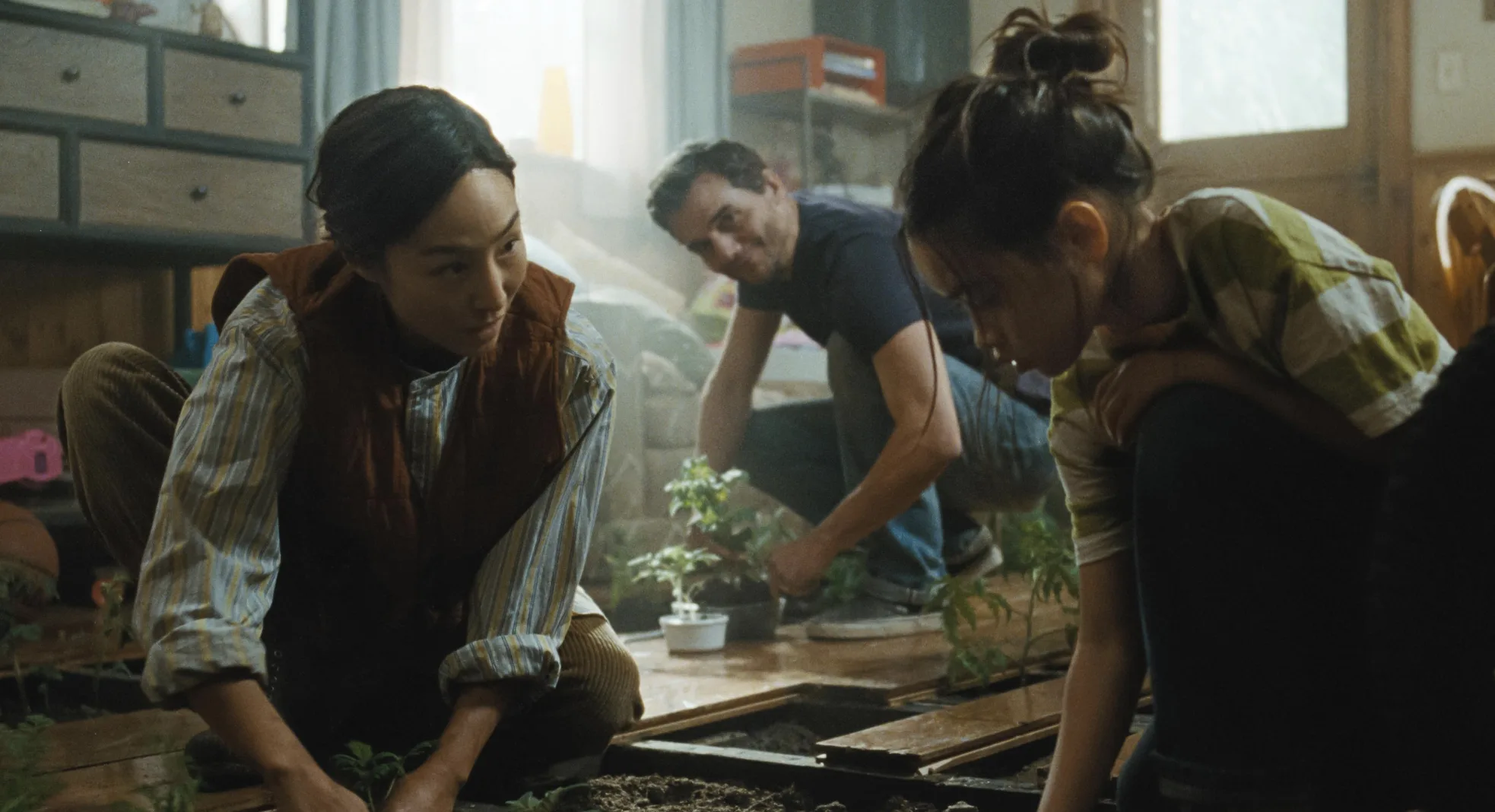
Wagner Moura plays Jason, the father trying to maintain order as the family’s resources and options disappear, while Greta Lee stars opposite him as Ann, whose resilience becomes increasingly important as their confinement worsens. Riley Chung plays their daughter Ruth as a child, with Emma Ho portraying the older Ruth after the story’s substantial passage of time. Noah Alexander Sosnowski plays young Graham, Jason and Ann’s son, while Gabriel Barbosa takes over as the older Graham. Netflix originally announced all four younger performers when production began in April 2025. The casting structure lets the movie physically show the years slipping past rather than relying entirely on makeup to age the children.
A Studio Location That Had to Feel Real
What makes The Last House interesting as a location story is that the most important place does not exist outside the production.
Shepperton gave Kevin Jenkins’ team the room to engineer a home that could deteriorate, flood and be repeatedly altered without losing continuity. Hampshire briefly opened that enclosed world toward the sea, while England’s production infrastructure quietly disappeared behind a story supposedly taking place thousands of miles away in Washington State.
For most movies, viewers ask which real house they can visit. Here, that question misses the clever part. The Delgado family’s home had to be controllable enough for a film crew to destroy and convincing enough for the audience to forget it was a set. By the time The Last House has finished turning shelter into captivity, Shepperton’s greatest contribution is that viewers barely notice the studio at all.